
FTG
FTG
  • Home
  • About
  • Blog
  • Contact Us
  • Français
  • Home
  • About
  • Blog
  • Contact Us
  • Français

September 2025:  Historic Investment in Quantum Signals the Industry has Arrived

10/10/2025

0 Comments

 
September 2025 will be remembered as the month quantum computing crossed the threshold from experimental technology to inevitable commercial reality. With over $3.5 billion in announced funding—the largest single-month investment total in the industry's history—the quantum sector experienced a seismic shift that signals far more than just capital flowing into promising startups. It represents a fundamental realization among the world's most sophisticated investors: quantum computing is no longer a question of "if" but "when," and the window to invest in this transformational technology is wide open right now!
The Numbers That Changed Everything
The scale of September's investments is staggering. Eight major funding rounds totaling $3.517 billion of private investment flowed into quantum companies, ranging from cutting-edge quantum computer manufacturers to the critical infrastructure providers that will enable the industry's scale-up.
Leading the charge was PsiQuantum, which raised a massive $1 billion in its Series E round at a $7 billion valuation. The round, led by BlackRock, Temasek, and Baillie Gifford, brought in heavyweight new investors including NVIDIA's NVentures, Qatar Investment Authority, and Morgan Stanley's Counterpoint Global. The company plans to use these funds to develop utility-scale quantum computing sites in Brisbane, Australia, and Chicago—a clear signal that quantum computers are evolving from laboratories to data center-ready commercial systems.
Quantinuum announced a $600 million Series B round that valued the Honeywell-backed company at an impressive $10 billion pre-money valuation. New investors including Quanta Computer and NVIDIA's NVentures participated, demonstrating the tech industry's growing conviction in the commercial viability of quantum.
The SPAC market also embraced quantum in a big way. Infleqtion announced a merger with Churchill Capital Corp. X at a $1.8 billion pre-money valuation, with the deal expected to provide over $540 million in proceeds. Meanwhile, Horizon Quantum Computing entered into a definitive business combination agreement with dMY Squared Technology Group in a transaction valuing the company at approximately $503 million.
Quantum Computing Inc. secured a substantial $750 million private placement, bringing its total cash position to $1.55 billion and total capital raised to approximately $1.64 billion. IQM Quantum Computers also raised an impressive $320 million in a Series B led by Ten Eleven Ventures, bringing the Finnish company's total funding to $600 million. The larges ever round for a European quantum company.
Even the infrastructure players—often overlooked but absolutely essential—saw significant investment. Maybell Quantum, which manufactures the ultra-cold dilution refrigerators required to maintain quantum states, raised $40 million in Series B financing to scale production of its cryogenic systems. NanoQT closed the first $14 million of its Series A to develop quantum interconnects, the "missing link" for scaling quantum processors.
Why Now? The Inflection Point Has Arrived
This unprecedented concentration of capital reflects three converging realities that are impossible for investors to ignore.
First, the technology has matured dramatically. Gone are the days when quantum computers were purely academic exercises. Companies like IonQ are already generating meaningful revenue—the quantum computing sector collectively generated between $650-750 million in revenue in 2024 and is expected to surpass $1 billion in 2025. PsiQuantum has sold three quantum computers and hundreds of quantum sensors, while Infleqtion reported approximately $29 million in trailing twelve-month revenue as of June 2025, reflecting an ~80% CAGR over the past two years.
The technical achievements are equally impressive. Rigetti Computing launched a 36-qubit processor in September 2025 that achieved 99.5% gate fidelity—cutting two-qubit errors in half compared to its previous generation. IonQ's Tempo system reached the AQ-64 performance milestone, effectively doubling its useful computational space. These are the kind of advances that signal a technology approaching commercial readiness.
Second, the use cases have become clearer. While quantum computing was once a solution searching for a problem, the applications are now obvious and compelling. Quantum computers promise breakthroughs in drug discovery, enabling pharmaceutical companies to simulate molecular interactions at the atomic level—something classical computers simply cannot do efficiently. Materials science, cryptography, financial modeling, supply chain optimization, and artificial intelligence all stand to significant enhancements.
The national security implications alone justify massive investment. Governments worldwide recognize that quantum superiority could have an influence on geopolitical power in the 21st century, just as nuclear and space capabilities did in the 20th. The U.S. Department of Defense, NASA, and the UK government are already deploying quantum systems, while Japan announced a $7.4 billion quantum investment in early 2025. Other initiatives are advancing in China, Australia, Canada, France and elsewhere in Europe.
Third, the competitive landscape is intensifying. NVIDIA's participation in multiple quantum funding rounds—despite CEO Jensen Huang's earlier skepticism about the technology—speaks volumes. When the world's most valuable company starts hedging its bets on quantum, other institutional investors take notice. The entrance of sovereign wealth funds, pension funds, and major financial institutions into the quantum investment space reflects a "fear of missing out" that typically precedes mainstream adoption of transformative technologies.
The Parallels to AI's Explosive Growth
The quantum investment surge bears striking similarities to the artificial intelligence boom that preceded it. A decade ago, AI was largely confined to academic laboratories and niche applications. Today, it's the backbone of trillion-dollar companies and the driver of entire markets. Quantum computing appears to be following a similar trajectory, albeit condensed into a shorter timeframe as investors apply lessons learned from AI.
The comparison is more than superficial. Quantum computing and AI are increasingly being viewed as complementary technologies. Quantum systems could dramatically accelerate machine learning training, enable more sophisticated AI models, and solve optimization problems that bottleneck current AI applications. Several companies are positioning their quantum technologies to enhance AI capabilities—a convergence that could drive the next generation of intelligent systems.
What September's Investments Signal for 2026 and Beyond
The sheer velocity of quantum investment in September 2025 suggests we're entering a new phase of the industry’s development. McKinsey research indicates that quantum computing companies alone are expected to generate over $1 billion in revenue in 2025, with that figure likely to grow exponentially as systems scale and use cases proliferate.
The funding announcements also reveal a strategic shift. While early quantum investments focused primarily on building better qubits and quantum processors, September's capital influx funded the entire ecosystem—from the computers themselves to the cryogenic infrastructure, quantum interconnects, software development tools, and quantum networking capabilities. This ecosystem approach suggests that industry leaders believe we're past the "science experiment" phase and into the "commercial deployment" phase.
For investors who missed the ground floor of cloud computing, AI, or even the internet itself, quantum computing represents what may be the last frontier-technology investment opportunity of this magnitude. The companies raising hundreds of millions or billions today could very well become the Googles, Amazons or NVIDIAs of the quantum era.
The Quantum Future Is Being Built Now
September 2025 wasn't just a remarkable month for quantum fundraising—it was a turning point for the entire technology sector. The convergence of technical maturity, clear commercial applications, and massive capital deployment suggests that quantum computing is transitioning from speculative possibility to inevitable reality.
The investors who wrote nine-figure and ten-figure checks in September weren't betting on science fiction. They were making calculated investments in companies with real products, paying customers, and credible paths to scaling. They recognized that the quantum computing market—currently valued at approximately $1.6 billion—is projected to grow to $7.3 billion by 2030, with some estimates suggesting the eventual market could reach trillions as quantum capabilities unlock solutions to previously intractable problems.
For those paying attention, the takeaway from September 2025 is clear: the quantum revolution isn't coming—it's here. The only question is whether more traditional investors will recognize this historic inflection point before the opportunity passes them by. $3.5 billion raised in 30 days is quite a statement.


0 Comments

March 29th, 2025

3/29/2025

0 Comments

 
​Distributed Quantum Computing: Advantages and Disadvantages of a Networked Quantum Future
As quantum computing continues its journey from theoretical concept to practical technology, researchers are increasingly exploring distributed quantum computing architectures. This approach—networking multiple smaller quantum processors rather than building ever-larger monolithic systems—offers potential solutions to some of quantum computing's most pressing challenges while introducing new complexities. This post explores the advantages and disadvantages of this emerging paradigm.
What is Distributed Quantum Computing?
Distributed quantum computing involves connecting multiple quantum processors into a network, allowing them to work together on computational tasks. Unlike traditional distributed computing with classical computers, quantum distribution must maintain quantum properties like entanglement and superposition across the network, presenting unique challenges and opportunities.

Advantages of Distributed Quantum Computing

1. Scalability Beyond Physical Limitations
One of the greatest challenges in quantum computing is scaling up the number of qubits while maintaining coherence. Current approaches face fundamental physical barriers:
Building a million-qubit quantum computer would require extraordinary engineering feats in cryogenic systems, control electronics, and error suppression.
Distributed quantum computing offers a different scaling path. Rather than struggling to fit more qubits onto a single chip or into one cryostat, networks can connect multiple smaller processors. Each node can be optimized independently, and the total computational power grows with network size rather than individual processor size.
2. Error Mitigation Through Modularity
Quantum systems are notoriously sensitive to noise and errors. If distributed architectures can once day isolate errors to individual nodes, preventing them from cascading through the entire system, this may increase the popularity of this approach. This modularity supports:
  • Independent error correction within nodes
  • Selective recomputation on faulty modules
  • Redundancy through duplicating critical computations
With appropriate quantum error correction protocols specifically designed for networked environments, overall system reliability may improve compared to single-system approaches.
3. Heterogeneous System Advantages
Distributed quantum computing could enable networks that combine different types of quantum hardware:
A distributed system might employ superconducting qubits for fast gate operations, trapped ions for long coherence times, and photonic qubits for communication—leveraging the best properties of each technology.
This heterogeneous approach allows specialized quantum processors to handle tasks they excel at, similar to how GPUs and CPUs specialize in classical computing. Quantum memory units could coexist with quantum processing units, optimized for different tasks within the quantum computation pipeline.
4. Inherent Support for Quantum Networks
Distributed quantum computing naturally aligns with the development of quantum networks and a future quantum internet. The technologies required overlap significantly:
  • Quantum repeaters
  • Quantum transducers between different qubit types
  • Entanglement distribution protocols
  • Quantum network routing algorithms
Investments in distributed quantum computing directly advance quantum communication infrastructure, supporting both computing and secure communication applications.

Disadvantages of Distributed Quantum Computing
1. Entanglement Distribution Challenges
The fundamental resource enabling quantum advantage—entanglement—becomes significantly harder to maintain in a distributed setting:
While local quantum gates operate at nanosecond timescales, distributing entanglement between remote quantum processors can take milliseconds or longer, introducing timing and coordination challenges.
Current quantum networks struggle with both the rate and fidelity of entanglement distribution, limiting the practical connectivity between nodes. These limitations directly impact the types of algorithms that can run efficiently on distributed systems.
2. Latency and Communication Overhead
Quantum information cannot be copied arbitrarily, making communication between quantum nodes fundamentally different from classical distributed computing:
  • Quantum teleportation requires classical communication (speed limited by light)
  • Entanglement swapping introduces additional operations and potential errors
  • Network topologies significantly impact algorithmic performance
For algorithms requiring frequent communication between qubits, these overheads can negate the advantages of distribution unless carefully managed.
3. Complex Programming and Compilation
Developing software for distributed quantum systems introduces layers of complexity beyond single-processor quantum computing:
  • Quantum resource allocation across the network
  • Tracking entanglement resources and their quality
  • Optimizing operations to minimize inter-node communication
  • Managing hybrid classical-quantum communication protocols
This complexity creates significant challenges for algorithm designers and developers, potentially slowing adoption and innovation.
4. Increased Error Surface
While modular architectures can contain errors, they also introduce new error sources:
  • Interface errors between different quantum technologies
  • Photon loss during quantum communication
  • Timing and synchronization errors
  • Memory errors during waiting periods
These additional error channels may reduce the overall fidelity of computations unless mitigated through advanced error correction schemes specifically designed for distributed environments.
5. Technological Heterogeneity Challenges
While heterogeneous systems offer advantages, they also introduce integration complications:
  • Different operating requirements (temperatures, control systems)
  • Incompatible qubit encodings requiring conversion
  • Varied performance characteristics complicating scheduling
  • Multiple engineering teams and expertise requirements
These integration challenges can increase development costs and timelines for practical distributed quantum systems.
Current Outlook
Today's distributed quantum computing remains largely experimental. Small-scale demonstrations have shown entanglement between distant nodes and simple distributed protocols, but practical distributed quantum computers that outperform monolithic systems remain aspirational.
Significant recent developments include:
  • Demonstration of entanglement between quantum processors in separate buildings
  • Development of specialized transduction interfaces between different qubit types
  • Theoretical architectures for modular quantum computers with photonic interconnects
  • Quantum network testbeds in several countries
The field is advancing rapidly, with research organizations and companies pursuing both monolithic scaling and distributed approaches as complementary paths forward.
0 Comments

February 18, 2025

2/18/2025

0 Comments


A Hidden Advantage: How Boutique Media Relations Agencies Outshine Giants

In the rapidly evolving landscape of media relations, size doesn't always equal success. While large agencies often dazzle with impressive office spaces and extensive employee rosters, boutique agencies are increasingly proving that smaller can be smarter, especially in specialized industries. Here's why the David versus Goliath dynamic in media relations often favors the smaller player.
 
The Power of Specialized Media Relationships
One of the most critical aspects of effective media relations is maintaining strong relationships with key journalists and media outlets. This is where boutique agencies often excel, particularly in niche industries. Unlike larger agencies that attempt to cover every sector, smaller agencies typically focus on specific industries, allowing them to develop deep, meaningful relationships with the journalists they work with regularly.

Consider the quantum computing sector, for instance. While a global agency might have thousands of media contacts, few if any of them are likely to be able to cover this industry. On the other hand, a specialized boutique agency focusing on deep tech will have cultivated personal relationships with the journalists who matter most in this space. These aren't just names in a database – they're real relationships built on trust, understanding, and mutual respect.

The journalists covering quantum, semiconductors or other specialized fields often prefer working with media relations professionals who truly understand their beat. Boutique agencies that focus on these areas speak the same language as these journalists, understanding the technical nuances and news value of developments in their field. This expertise leads to more meaningful pitches and higher success rates in securing coverage.
 
The Attention Deficit of Large Agencies
Large agencies often operate under a hierarchical structure where their biggest accounts naturally command the most attention and resources. This creates an inherent challenge for smaller clients, who might find themselves lost in the shuffle. A quantum computing startup paying $10,000 a month will inevitably receive less attention than a Fortune 500 company with a six-figure monthly retainer.

In contrast, boutique agencies typically maintain a more balanced client portfolio. Without the pressure to service massive global accounts, they can provide greater attention and dedication to each client. This results in more personalized service, faster response times, and better overall outcomes. When your account team isn't constantly being pulled away to handle crisis communications for a global corporation, they can focus on delivering consistent, high-quality results for your brand.
 
The Quality Over Quantity Paradigm
Perhaps the most misleading metric in the selection of an agency is the size of the agency itself. The number of employees or global offices has little correlation with an agency's ability to deliver results for any specific client. What matters is the quality of work, dedication to client success, and ability to execute effectively.
Boutique agencies often bring several advantages in this regard:
  1. Agility and Innovation: Smaller agencies can adapt quickly to changing market conditions and client needs. They're not bound by rigid corporate structures or lengthy approval processes.

  2. Direct Access to Senior Expertise: In boutique agencies, senior professionals often work directly on accounts rather than delegating to junior staff. This means clients benefit from experienced strategists rather than learning-on-the-job account executives.

  3. Customized Strategies: Without the need to fit clients into predetermined service packages, boutique agencies can craft truly customized approaches that align with specific business objectives.

  4. Results-Focused Metrics: Smaller agencies often survive and thrive based on their ability to deliver measurable results, making them naturally more focused on outcomes rather than process.
 
The Value Proposition
When evaluating agencies, the key criteria should focus on their ability to deliver results and provide excellent customer service. This includes:
  • Demonstrated success in securing meaningful media coverage
  • Deep understanding of your industry and target media
  • Responsive and proactive communication
  • Strategic thinking and creative approaches
  • Clear measurement and reporting of outcomes

The size of an agency's global network or employee count doesn't contribute to achieving these objectives. In fact, smaller agencies often provide better value for investment, as they have lower overhead costs and can invest more resources directly into client service.
For companies in specialized industries, particularly those in emerging technology sectors, boutique agencies offer a compelling alternative to the traditional large agency model. They combine deep industry expertise, strong media relationships, and dedicated service in a package that often delivers superior results at a more reasonable cost.

Specialized firms which prioritize expertise and results over size and scale are one of the drivers helping small companies get bigger. As industries become more specialized and the media landscape more fragmented, the ability to provide focused, expert service becomes increasingly valuable. In this environment, boutique agencies aren't just an alternative to large agencies – they're often the smarter choice.

0 Comments

November 12, 2024

11/12/2024

0 Comments

 
Error Correction: The Hidden Challenge of Quantum Computing
When discussing quantum computing, conversations often revolve around the remarkable potential of quantum bits (qubits) to solve complex problems that classical computers cannot tackle efficiently. However, beneath this promising facade lies a fundamental challenge that continues to be one of the biggest obstacles to practical quantum computing: error correction.

The Fragile Nature of Quantum States

Unlike classical bits, which are relatively stable and can maintain their states (0 or 1) for extended periods, quantum bits are incredibly delicate. Qubits exist in a superposition of states, allowing them to represent multiple possibilities simultaneously – a property that gives quantum computers their unique power. However, this same characteristic makes them extremely susceptible to environmental interference.

The slightest disturbance – whether from temperature fluctuations, electromagnetic radiation, or mechanical vibrations – can cause qubits to "decohere," essentially losing their quantum properties and the information they carry. This decoherence occurs in microseconds or milliseconds, even in the most advanced quantum systems available today.

The Scale of the Problem

The challenge becomes even more daunting when we consider the scale of error correction needed for practical quantum computing. Current estimates suggest that for every logical qubit (a qubit that can be used for actual computation), we need anywhere from 1,000 to 10,000 physical qubits for error correction. This requirement creates a significant barrier to scaling quantum computers to sizes where they can solve meaningful problems.

To put this in perspective, if we want to build a quantum computer capable of breaking common encryption methods (a frequently cited potential application), we would need millions of physical qubits working together coherently. Current state-of-the-art quantum computers have only reached the scale of hundreds of physical qubits, and even these systems struggle with error rates that are too high for practical applications.

Quantum Error Correction Strategies

Researchers have developed several approaches to address the error correction challenge:

Surface Codes
One of the most promising approaches is the surface code, which arranges physical qubits in a two-dimensional lattice. This arrangement allows for the detection and correction of both bit-flip and phase-flip errors, the two primary types of errors in quantum systems. However, the surface code requires a significant number of physical qubits to create a single logical qubit, making it resource-intensive. A major drawback of surface codes is their high overhead in terms of quantum gates required for syndrome measurements - each error correction cycle requires numerous CNOT operations between data and measurement qubits, which themselves can introduce new errors into the system.

Topological Quantum Computing
Another approach involves topological quantum computing, which uses specialized quantum states that are inherently more stable against decoherence. Microsoft, for example, has been pursuing this approach through the study of Majorana fermions. While theoretically promising, this method has yet to be demonstrated practically. The primary challenge with topological qubits is that the exotic quantum states they rely on (such as Majorana zero modes) are extremely difficult to create and verify experimentally - despite over a decade of intense research, definitively demonstrating the existence of these states in a controlled setting remains elusive.

Bosonic Codes
A more recent and promising development in quantum error correction is the use of bosonic codes. Unlike traditional qubit-based codes, bosonic codes exploit the infinite-dimensional Hilbert space of bosonic modes (such as electromagnetic fields in superconducting cavities) to encode quantum information.

The key advantages of bosonic codes include:

1. Natural Error Protection: Bosonic codes can be designed to protect against the most common types of errors in quantum systems naturally. For example, the "cat code" stores information in superpositions of coherent states (quantum states that most closely resemble classical behavior), making it particularly robust against photon loss.

2. Hardware Efficiency: Because bosonic codes use the natural degrees of freedom of quantum harmonic oscillators, they can potentially achieve better error protection with fewer physical resources compared to traditional qubit-based codes.

3. Continuous Variable Quantum Computing: Bosonic codes open up new possibilities for quantum computing architectures based on continuous variables rather than discrete qubit states, potentially offering more efficient ways to perform certain quantum operations.

Some notable examples of bosonic codes include:

- Cat Codes: Named for Schrödinger's cat, these codes use superpositions of coherent states to encode quantum information
- Binomial Codes: These codes use superpositions of Fock states with specifically chosen photon numbers
- GKP Codes: Gottesman-Kitaev-Preskill codes that encode logical qubits in the continuous degrees of freedom of oscillators

The Cost of Error Correction

The requirements for quantum error correction create several cascading challenges:

1. Hardware Complexity: The need for thousands of physical qubits per logical qubit demands extremely complex hardware systems. Each physical qubit requires precise control and measurement capabilities, leading to elaborate control systems and wiring challenges.

2. Energy Requirements: Maintaining quantum states typically requires extremely low temperatures, often near absolute zero. Scaling up to millions of qubits would require significant cooling power and energy consumption.

3. Economic Viability: The combination of hardware complexity and energy requirements makes building large-scale quantum computers extremely expensive. This cost could limit the accessibility and commercial viability of quantum computing technology.

Near-Term Implications

The challenges of error correction have significant implications for the near-term development of quantum computing:

NISQ Era Limitations
We are currently in what experts call the NISQ (Noisy Intermediate-Scale Quantum) era. These systems, while impressive demonstrations of quantum technology, lack sufficient error correction to perform many of the algorithms that make quantum computing promising. This limitation means that many of the most exciting applications of quantum computing – from drug discovery to financial modeling – remain out of reach.

Alternative Approaches
The significant overhead required for error correction has led some researchers to explore alternative approaches:
- Error mitigation techniques that attempt to work with, rather than eliminate, quantum noise
- Hybrid quantum-classical algorithms that minimize the required coherence time
- Hardware-specific algorithms that take advantage of the natural properties of particular quantum systems

Looking Forward

While the challenges of quantum error correction are substantial, they are not insurmountable. Research continues to advance in several promising directions:

1. Better Physical Qubits: Improving the base stability of qubits could reduce the overhead needed for error correction.

2. More Efficient Codes: Development of new error correction codes that require fewer physical qubits per logical qubit.

3. Novel Materials: Research into new materials and methods for creating more stable quantum systems.

Conclusion

Error correction remains one of the most significant barriers to achieving practical quantum computing. While progress continues to be made, the requirement for thousands of physical qubits per logical qubit presents a formidable scaling challenge. This challenge suggests that truly fault-tolerant quantum computers capable of running complex quantum algorithms may still be years or even decades away.

For the near term, we should expect quantum computing development to focus on improving the quality of physical qubits and exploring applications that can work within the constraints of NISQ devices. The field remains exciting and full of potential, but realistic expectations about the timeline for practical quantum computing must account for the fundamental challenge of error correction.
0 Comments

January 05th, 2024

1/5/2024

1 Comment


Demystifying the Future: Leveraging Media to Explain New Technologies

​In an era where technological advancements are occurring at an unprecedented pace, bridging the gap between innovation and comprehension has become a formidable challenge. The intricacies of new technologies often elude the understanding of the general public, making it crucial to find effective ways to communicate these complex concepts.
The press, with its diverse forms and widespread reach, can be a powerful tool in reaching key audiences and helping them to better understand the importance and impact of new technologies. In this blog post, we will explore the value of using various media channels to explain new technologies, emphasizing their role in fostering awareness among key stakeholders, attracting talent and investment to innovators, engaging partners and ultimately, driving societal acceptance.
 
The Complexity Conundrum
The rapid evolution of technologies such as artificial intelligence, blockchain, and quantum computing introduces complexities that can be confusing to some. Breaking down these intricate concepts into digestible pieces is essential to ensure that the benefits and potential risks are understood.
The media, in its many forms, offers a dynamic platform to bridge the comprehension gap. From in-depth reporting in newspapers and magazines to engaging narratives in podcasts, each medium has unique capabilities that can be harnessed to simplify complex technological subjects and provide the depth necessary to contextualize why these new solutions matter. Let's explore how engaging various media can be beneficial in making the incomprehensible clear.
 
1. Visual Storytelling: Exploring the World of Infographics and Videos
Visual storytelling, through media such as television and online videos, has the power to distill intricate technological concepts into easily digestible formats. Complex algorithms or intricate blockchain processes can be simplified through well-designed visuals, making the information accessible to a wider audience. Many journalists who wish to transform complex topics into engaging and visually appealing content have been using these formats for years.
 
2. Podcasts: Conversations that Connect
Podcasts offer a unique space for in-depth discussions and interviews, allowing experts to communicate their insight directly to the audience. The conversational format can break down barriers by telling the story of the people behind the technology, providing real-world context and applications for its use. Podcasts like The Vergecast have successfully navigated the intersection of technology and storytelling, making it easier for listeners to grasp the intricacies of new technologies.
 
3. Innovation as News
Some innovations are so game changing, they are news on their own. The development of generative AI and ChatGPT4 in particular was covered widely in 2023. This is because the media clearly understood the potential impacts, both positive and negative, that this type of technology could have. Innovations in autonomous vehicles, cybersecurity, clean tech, AI and quantum computing all have the potential to be game changers for our environment and economy, as well as business and society more broadly. For these reasons, media are following new developments in these industries closely and keeping their readers well informed.
 
Building Awareness and Shaping Perception
Media not only simplifies complex technologies but also plays a pivotal role in building awareness and shaping public perceptions of innovations and the brands behind them. Well-crafted narratives have the potential to attract investors, alleviate fears, flag potential dangers and promote a positive understanding of the transformative power of technology.
Most major corporations have large teams working on media relations, public affairs, PR or communications. But by any name, you can be sure these companies understand what there is to be gained, and lost, in managing perceptions of their brands.
How then can smaller startups and scaleups compete for scarce media coverage against far larger companies with deep pockets?
 
Getting Expertise on Your Side
There are an array of media relations agencies which will work with your business to help secure the media coverage you need to grow. By doing this, more people will learn about your business and the innovations it is developing. However, it is crucial to ensure that you select the right agency for your company’s needs today, and in the medium-term as well. Ask yourself some of these questions:
  • Does this agency specialize in working with tech companies?

    Those who do are likely to have relationships with key journalists who cover your industry, and who have the expertise required to both understand your innovations and explain them to the correct audience. Without this, it could be an uphill battle.

  • How will they invoice us?

    Some agencies charge $10,000 or more as a monthly minimum. That might be alright for the likes of IBM and Amazon, but most technology startups and scaleups don’t have that budget for media relations every month. In fact, many of them don’t even have news to share every month, and that retainer can often go to waste. Be sure to find an agency that gives you a package that’s right for you and that none of your budget is lost in this way.

  • Who else have they worked with and how to they develop a compelling story for the press?

    Some agencies will give you assurances until they are blue in the face. They’ll tell you you’re special and they have a formula that works every time for getting press coverage. That’s nonsense!

    If your business and the innovations it has developed are indeed special, why would they need to use a formula to develop a pitch to journalists? Each story is different, with different reporters potentially interested. No two pitches should ever be developed the same way if you expect to get any genuine interest from reporters who are bombarded each day by hundreds of these formula-based pitches.

  • What do we have to do to ensure the agency we hire can deliver?

    This is a crucial element in the relationship between any business and its media relations representatives. There will be a brief but vital onboarding process where the agency gets to know how your business works, learns about what’s coming on your product roadmap and begins to develop a communications plan that will align with the needs of your business moving forward. Based on this plan, and regular meetings every week or two, your consistent input will help guide your media relations team to consistent success.
 
What we Should Tell the Press?
Any innovation that’s a first or does something no other device can do will be newsworthy. Investments in your business, deals with new partners or corporations interested in working with your business… all of these should garner positive media attention if you’re working with a competent agency partner.
Make a list of things that you think might be suitable to communicate to the media, and ask a few agencies for feedback on the list. This will give you a good sense of who has good ideas about promoting your business and how they plan to get you results. It will also weed out those who are looking to maximise their billings above all else.
Those who’ve read this far are likely genuinely interested in hiring an agency to get their brand out there, explain their product and shorten their sales cycle. Those individuals are encouraged to contact us here to set up a free consultation with no obligation, and discuss how to give your business the benefit of being a media darling. 
1 Comment

June 24th, 2023

6/24/2023

0 Comments


Working With a PR Firm When Your Budget is Limited

A limited budget doesn't need to mean limited options. A PR firm can help you reach your business goals no matter how much you can spend. For small and medium sized businesses or new startups looking to make an impact for the first time, committing to an annual public relations program can feel like a daunting task – especially when funds are limited and marketing and PR results aren’t always guaranteed. Balancing the desire to put a media spotlight on your business through public relations with your business’s evolving budget can be challenging as well, but it’s an important distinction to make when it comes to your PR spend. 

So how do you know when it’s time to hire a PR firm – and how can you make the most of your limited budget? By taking advantage of a bit of industry knowledge, knowing the people you’re working with and having a clear sense of your ultimate goals for media coverage, it is possible to find the right balance. 

1. You need expertise to reach your business goals. 

If you have an effective business plan, a marketing plan, and goals for your quarter and year, you’ve already gotten a lot of the heavy lifting done. It’s incredibly common for small-business owners to know where they’d like to go and what goals they want to reach – and there’s nothing wrong with needing a little help to get there. 

Know what sets you apart. 

If you sit down in a meeting with a PR firm and you tell them what makes your business unique and why you want to differentiate yourself, you’re going to near-instantly be able to maximize the money you spend on PR. Public relations professionals hone in on the best, most newsworthy stories, and knowing where your organization sits in the market can only help make the most of those stories. On the other hand, if you are not sure how to position your firm, PR pros can absolutely help you develop your “elevator pitch” and make sure that your messaging is clear and relevant. 

Be prepared to commit. 

A solid, strategic PR plan doesn’t come to life overnight, and if you want to maximize your PR return on investment, you’ll likely be asked to commit to at least a three- to six-month project. Like with many things in life, PR is a marathon – not a sprint – and a good PR firm will set that expectation early. 

That said, don’t be shy about bringing up your budget. PR firms and their fees can vary wildly depending on the scope of your desired project, the size of their firm, and the size of your organization. Some PR firms offer discounts to small businesses as a show of community support, and any good agency will be honest with you about whether or not your finances are aligned with their rates and fees. 

2. You have a short-term project that needs extra support. 

A short-term PR project – one with a definite start time and end time – is a fixed cost based on estimated hours or scope of work. If your organization is hosting something like a charity event, media trip, or new location opening, this may be a budget-friendly option for you. This may be a more budget-friendly option for organizations interested in engaging a PR firm to achieve a single goal: building buzz around a single event, such as a product launch, VC raise or onboarding a new customer, as opposed to a longer-term engagement focused on building press around your organization. 

Ask about packages. 

Many PR firms offer “starter packs” for small businesses interested in dipping their toes into PR. If you’re thinking about engaging a PR firm to support a single endeavor but might also want to expand out into longer retainer contracts, ask your local boutique firm about one-off project packages. Every PR firm is different, but many will be willing to work with you on a single project in the hopes of building an ongoing relationship. 

Keep an eye on ROI. 

Choosing a specific PR goal that has a start and end date – like building attention around an event like a new discovery or financing raise – can give you an insight into the potential return on investment you could see if your organization worked with a PR firm on an ongoing basis. While long-term PR goals take time to achieve, there’s nothing wrong with getting a sense of how – and if – PR works for your organization through a short-term project to see how media coverage could help your company in the long run. 

3. You want to protect your brand. 

There’s no denying that technology, the internet, and social media can make or break a brand now more than ever before – and the last thing that any small-business owner wants is to be publicly scrutinized. Crisis management is something no one wants to think about, but it’s best to be prepared before it happens, and working with a PR firm is a great way to do that. 

Ask about crisis management. 

Despite the word crisis in the phrase, crisis management in the world of public relations can be defined as just an unexpected event that negatively impacts a company’s reputation or operations – anything from an errant tweet to a manufacturing mistake. While it’s never a great feeling to know this has happened, PR firms experienced with crisis response and management can help you approach and respond well to the incident without leaving a negative lasting impact. 

4. You want to invest in quality coverage. 

Like many things in business, the quality of coverage your organization receives may vary along a spectrum. If you’ve had some luck pitching yourself to local organizations or getting a press release posted on the local paper’s website, you likely know the press that generates could be better if you worked with experts. If you’re at that point, engaging a PR firm to boost the quality of the coverage your business is receiving is likely the next right step. Once you achieve good coverage, you can maximize its value by using it as the foundation for social media posts, updates on your website, inclusion in a newsletter and more. Public relations can truly be “the wind beneath your marketing content’s wings” and in this way, further increase the return on your PR investments. 

Remember that PR takes time. 

While specific announcements do garner coverage on their own, it may take months to see ongoing PR results in between announcements as well, but there is an absolute snowball effect once you get up and running. And once you have created a name for yourself in the market and have learned how to speak convincingly to the media, you will no doubt see the benefits of receiving third-party media endorsements. 

Even if you have a limited budget to work with, engaging a PR firm to boost your business goals and get more eyes on the work you’re doing is often the next logical step. Each agency has its own expertise, services, and rates, and finding one that gels well with your business is a process that isn’t to be taken lightly. But if you find yourself wishing you had support in reaching your growth goals, getting in touch with a PR firm can be a great way to see how you can elevate your brand and business. 
0 Comments

June 05th, 2023

6/5/2023

0 Comments


How Tech Companies can Navigate the Attention Economy​

What is FTG Media? We are a boutique agency for small and mid-sized companies, and our clients’ success is at the core of everything we do. We work with startups, scale-ups, investors and institutions in the tech sector and help them accelerate their journey along the path to growth and maturity. We help make others successful!

How do we accelerate our clients’ success? We act as a connector between tech companies and all the other actors in the innovation ecosystem. Promoting our clients through positive and proactive media coverage. Telling your company’s story, in depth and on your terms. This kind of exposure paves the way for your partnership and business development teams to come along and accelerate their dealflow. In this way, our objectives are aligned, and your growth is our growth.
​
This alignment is essential as the world moves away from certain traditional commodities and becomes more of an “Attention Economy”. Many of the world’s largest corporations and richest people have built their fortunes by monetizing the attention of the masses. Newspapers, TV, YouTube… even your next-door neighbor’s podcast… they are all competing for attention. So are all of your competitors.

FTG helps its clients reframe the conversation around key issues in their vertical, promoting their point of view, and putting their solutions front and center in the public discourse. We help you obtain both the depth and volume of attention necessary in the market to facilitate your internal teams processing that notoriety into new partnerships, and help your business developers monetize it in the form of new sales growth.
​
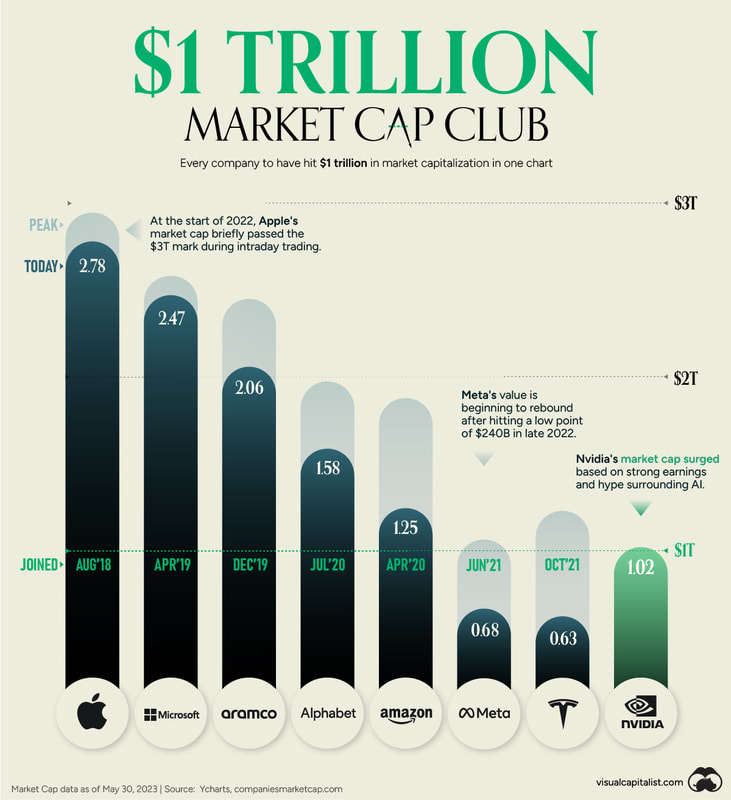
Attention is the world’s most valuable commodity. That’s why so many of the world’s largest corporations are competing for it. 
Picture
Apple, Microsoft, Alphabet, Amazon and Meta, some of the most valuable corporations in the world, derive significant portions of their revenue from simply keeping people’s attention. What’s being done to ensure that the right people are paying attention to your brand?

FTG is here to help make sure your company is getting its rightful share of the market’s attention. Are investors paying attention to your business? Journalists? What about corporate partners in your key verticals?

Based on your goals, partners and company roadmap, we build a custom communications plan for your brand designed to engage your target audience and impress upon them the quality and value of what you’re producing. Working with us will lead to articles about your business appearing in key publications which are actually read by the people you’re trying to reach!

Get your brand onto the front page and keep it there! Reach out to us today and we'll initiate a discussion on how we can work together to create a buzz among customers and investors that should be working with your business.

0 Comments


3/28/2015

1 Comment


What Are Your Other Priorities?

Picture
Is your business active on social media?

Yes? Good for you. You're growing your online audience, increasing your brand recognition and responding to your customers in real time. You're bringing more leads into the top of the sales funnel, positioning your company as a leader in your industry and growing your influence among key demographics. Best of all, you are having direct, two-way conversations with an engaged group of customers and prospects who have voluntarily decided to follow you... which has never been possible through any other medium.

What's that? Oh, your business isn't active on social media? You have a Facebook page but you haven't done anything with it in months because you've been focussing on other priorities... I understand. 

Well, during those months your competitors have been able to add hundreds, even thousands of local followers to their audience. They have been able to reach these potential customers to tell them about special promotions in store. They have marketed new products directly to people who have expressed an interest in those goods through custom video, pictures and live chat. We now even have live video broadcasts happening on social media every day.

Can you remind me what those other priorities were that you've been working on?


The fact is everybody has customers in one form or another. B2B marketers often have even more reason to be active on social media because they also have investors, large groups of employees, regulators, suppliers and concerned communities they can engage with.

Some people may not understand social media or content marketing. Fair enough, you can get help with these things. You can hire someone external to help or better yet to train your team on how to handle this yourselves. 

Can't afford it? I bet is costs less than you think. And besides, how many more customers can you afford going across the street instead of buying from you?


As the population continues to age, if you're not engaging your key customer demographics and other stakeholder groups, you can bet somebody else will, and where will that leave you? As young people grow up and start having more and more disposable income, you'll need to be on social media eventually to reach them... they don't listen to the radio, and they certainly don't read the newspaper. Just something to think about when planning your next marketing budget.

1 Comment

    Author

    Steve La Barbera is the Founder of FTG Media.

    Archives

    October 2025
    March 2025
    February 2025
    November 2024
    January 2024
    June 2023
    March 2015

    Categories

    All

    RSS Feed

  • Home
  • Acceuil
  • About
  • À propos
  • Contact
  • Contactez nous
  • Blog
  • English
  • Français